
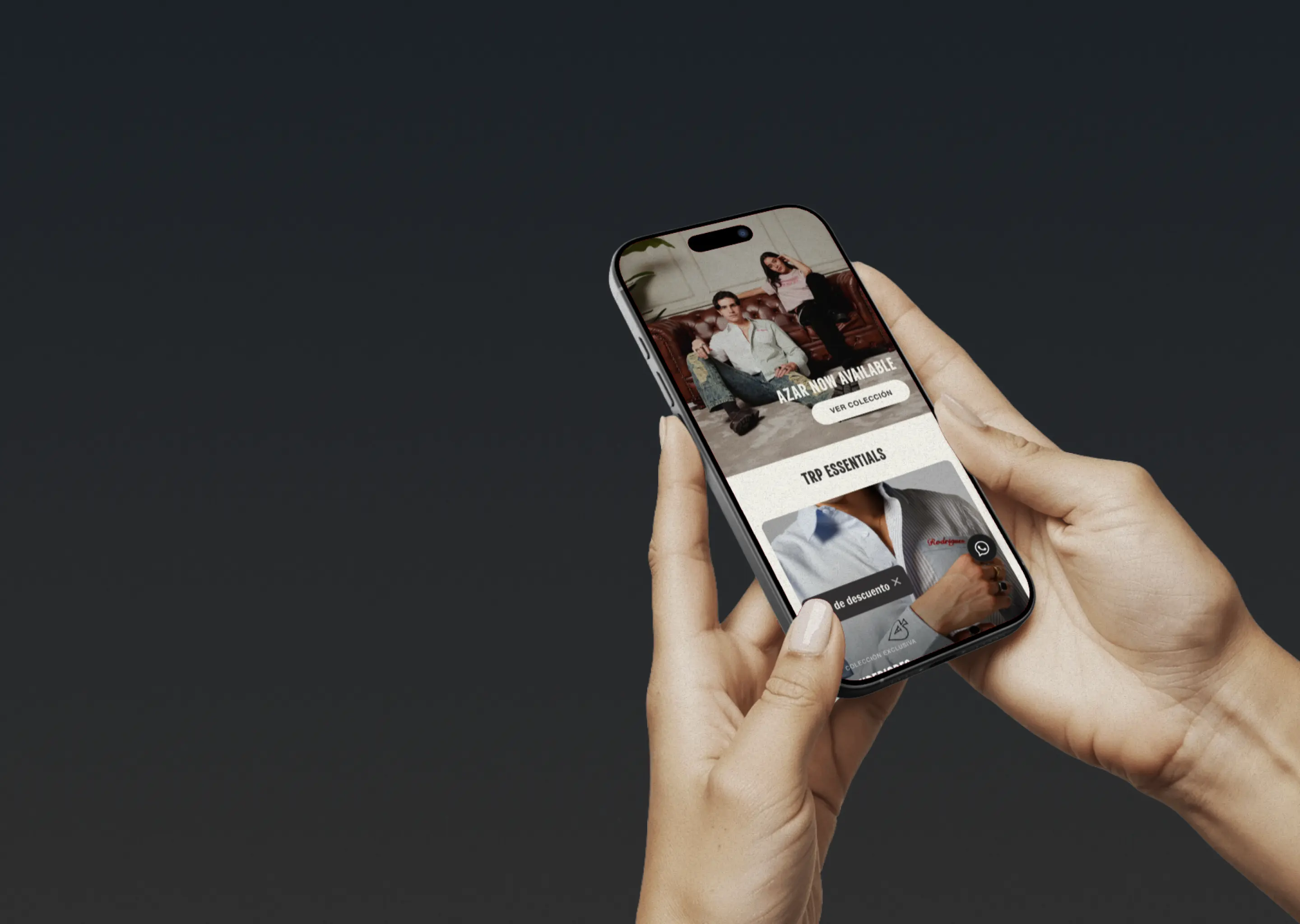
The brand had no functional digital presence — a half-built site, no visual identity, broken pages, and zero mobile configuration. The goal was to deliver a complete, conversion-ready site that could generate real sales from day one.
Identity first, functionality after
The problem wasn't purely technical. Without visual coherence, the site couldn't generate trust regardless of how functional it was. The homepage and brand language were redesigned first — using Rodriguez's identity as the structural axis — before touching the purchase flow.
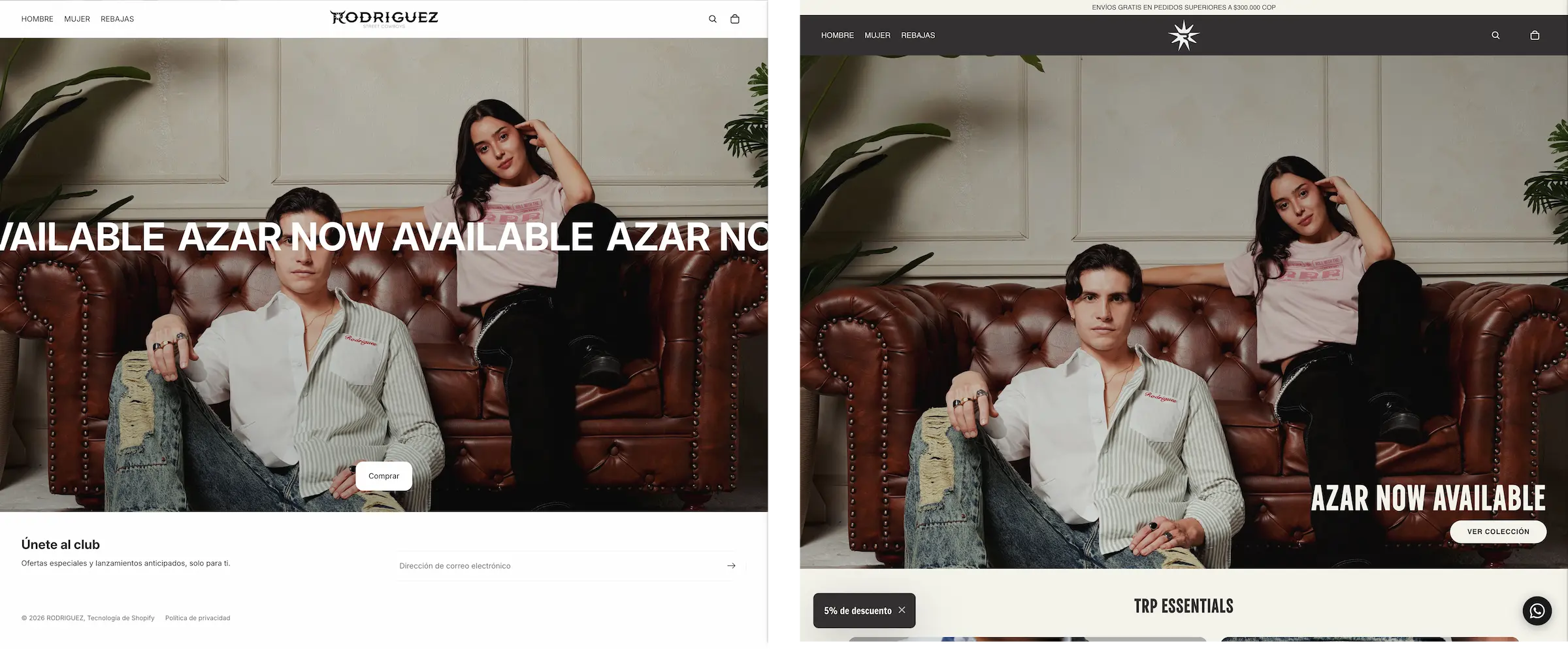
Purchase flow audited page by page
Every step of the e-commerce flow was mapped and corrected — product pages, cart, and checkout. Missing pages were built from scratch: promotions, general catalog, and accessories. Nothing was assumed functional until tested.
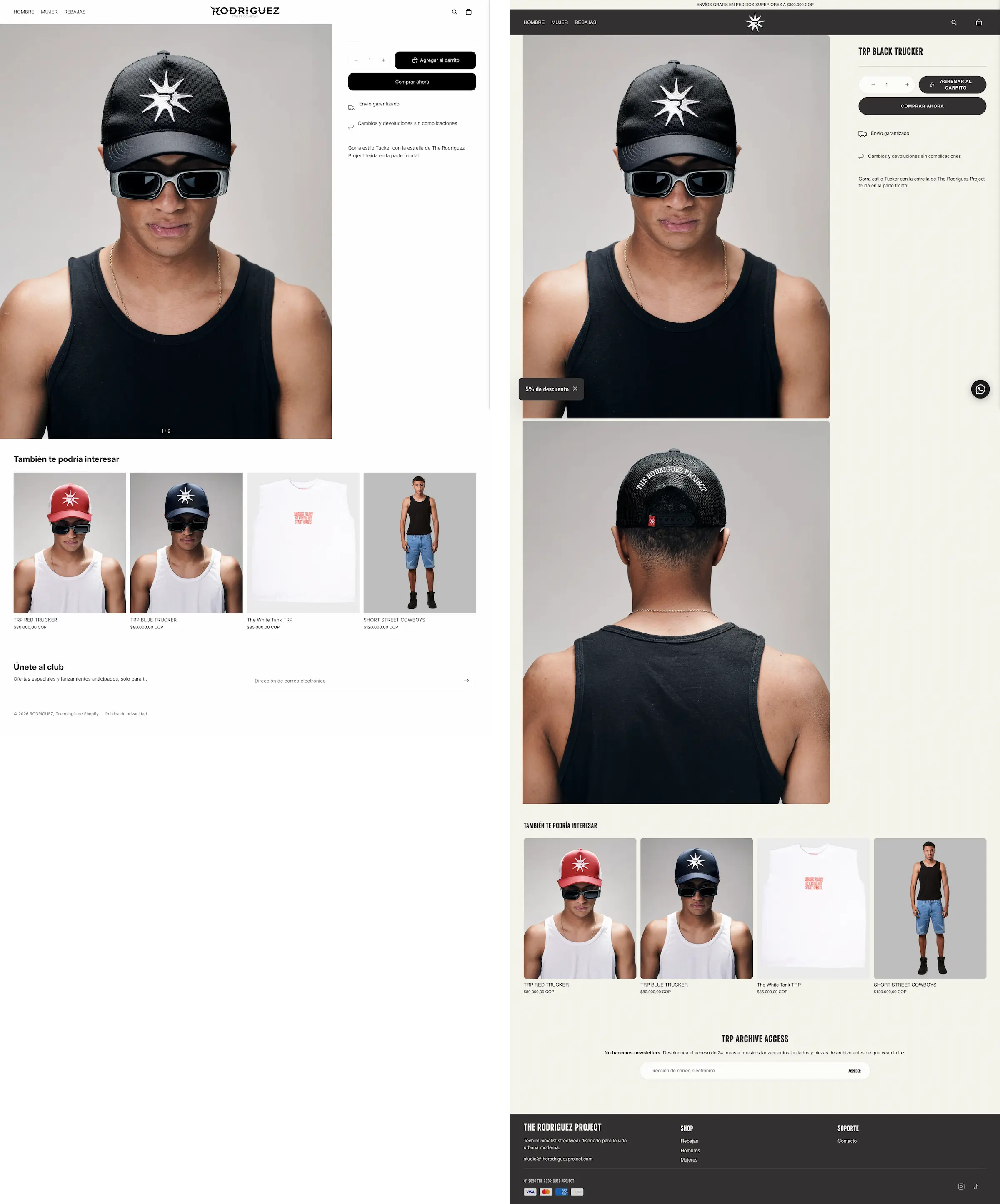
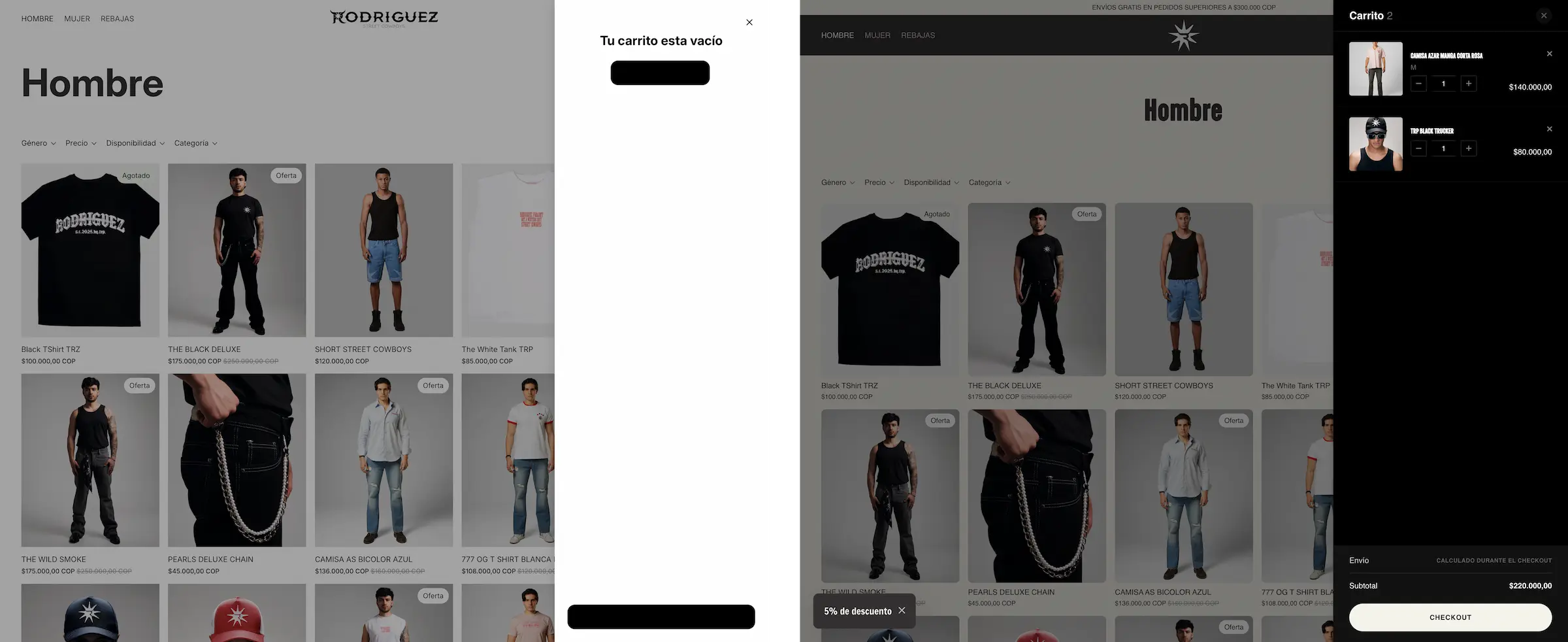
Competing visually with bigger brands
The design criterion was clear: the gap between Rodriguez and established competitors shouldn't be visible. Every component — product cards, collection pages, cart — was designed to match the visual standard of larger e-commerce players.
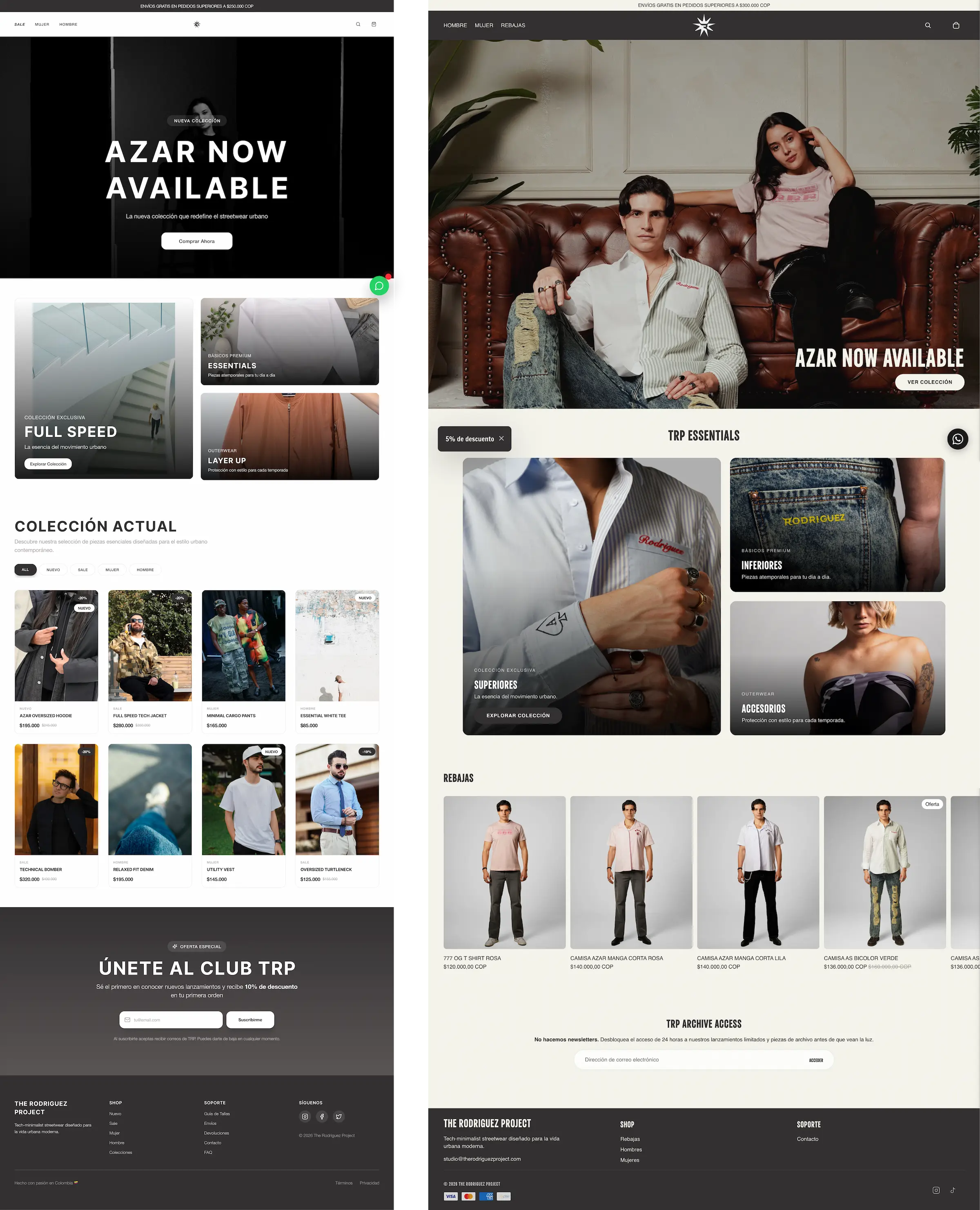
The site is live. See the result firsthand.
View live site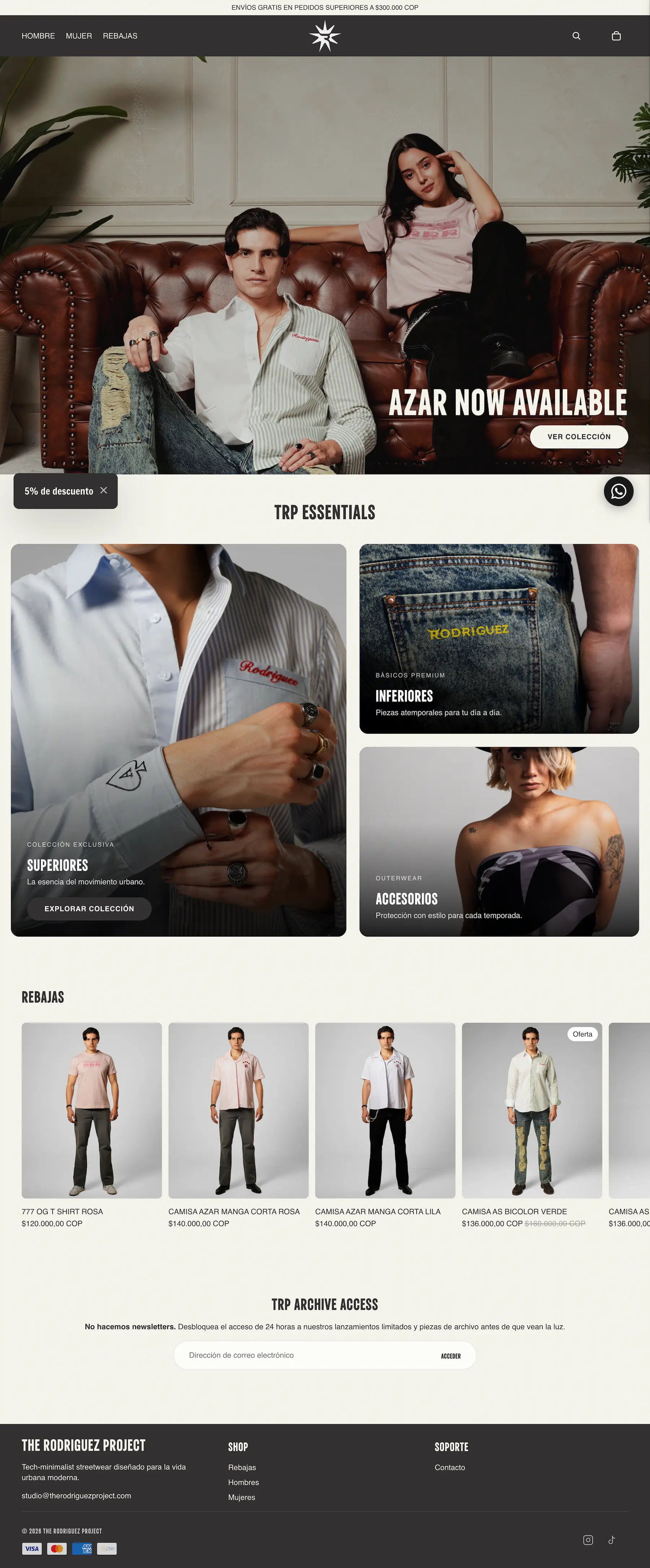

Trust is the real bug
A broken site isn't a technical problem — it's a trust problem. Fixing functionality without fixing identity would have delivered a working site no one believed in.
Design credibility converts into revenue
The redesign's first real proof wasn't a metric on a dashboard — it was the brand's first sale through the site. Once the credibility problem was solved, nothing stood between a visitor and a transaction.